Whether you are interested in learning about local manufacturers, industrial clusters, OEM collaborations, or require assistance with travel planning, hotel recommendations, or other travel arrangements, feel free to contact us at any time. We would be delighted to provide you with advice, free of charge.
| Cluster Name | Tong'erpu – China’s Fur Capital (Dengta, Liaoyang, Liaoning) |
| History | 1980s: industry started; over 40 years developed into a full-chain fur and leather garment cluster |
| Manufacturers | 140+ fur and leather garment manufacturers; 4 specialized industrial parks; 500,000+ ㎡ of standard factory space; 4,000+ market merchants |
| Employment | 1,000+ livestreamers and nearly 8,000 people directly employed in e-commerce; large skilled workforce across tanning, cutting, sewing and finishing |
| Annual Output | 4 million pieces/sets of leather and fur garments; 30 million hides tanning capacity per year |
| National Output Share | One of China’s three major fur and leather garment clusters; “China Fur Capital”; significant domestic market share in fur garments |
| Export Ratio | Exports to Russia, Korea, Japan and 30+ countries and regions; expanding into Europe and Central Asia |
| Core Products | Mink fur coats, parkas, fur-lined garments, leather fashion, lightweight four-season fur accessories |
| Service | OEM/ODM and high-end custom production; silhouette, material, colorway and climate adaptation; national-level testing for fur material, color fastness and safety; online and offline sampling; bonded logistics and cross-border e-commerce support |
Tong'erpu Town lies in Dengta City, Liaoyang, Liaoning. It holds the title “China Fur Capital” and is one of China’s three major fur and leather garment clusters. The town is 150 km from Yingkou Port, 300 km from Dalian Port and only 40 km from Shenyang Taoxian Airport, with a well-connected expressway network for raw material imports and finished goods exports. The industry started in the 1980s and, over more than four decades, has developed into a full-chain manufacturing and distribution base integrating fur farming, tanning and dyeing, design and R&D, garment processing, quality testing, physical markets and cross-border e-commerce.
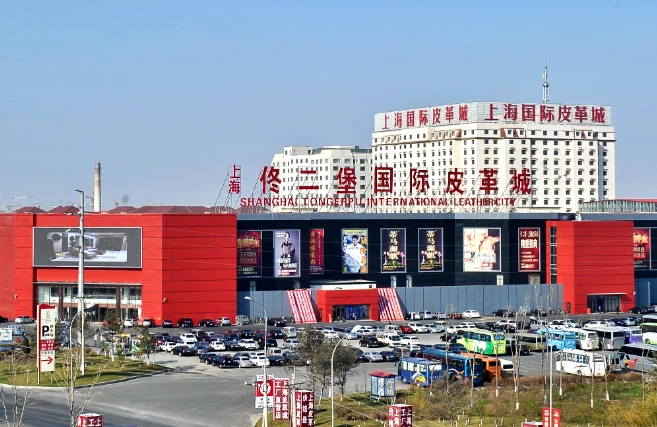
The cluster hosts more than 140 fur and leather garment manufacturers, supported by four specialized industrial parks, a tanning and dyeing park and a bonded logistics park, with over 500,000 ㎡ of standard factory space. Local tanneries can process 30 million hides a year, and annual output reaches 4 million pieces/sets of leather and fur garments. More than ten large professional trading markets operate in the area with over 4,000 merchants, and fur garment sales hold a significant share of the domestic market.
Products cover mink fur coats, parkas, fur-lined garments, leather fashion and lightweight four-season fur accessories. The cluster serves both long, heavy cold-weather coats for Northeast China and Russia and lightweight fashion fur for Japan, Korea and Europe. It handles high-end custom orders and large-volume production as well as small-batch OEM/ODM, adjusting silhouettes, material mixes and colorways to destination climate and fashion trends. Leading factories such as Qianshunzi Garments maintain design teams with international designers and iterate over a thousand new styles each year.
Complete local supporting capacity is Tong'erpu’s core advantage for global buyers. Upstream, the cluster has large-scale local mink farms and long-term raw-skin supply channels with partners in Finland, Denmark, Italy and the US. Tanning, fur processing, pattern-making and cutting, sewing and finishing can all be completed locally. A workstation of the National Leather Products Quality Supervision and Inspection Center is based here, with national-level testing qualifications for fur material, color fastness and safety performance, providing test reports for export orders.
Tong'erpu runs both online and offline channels. Beyond traditional wholesale markets, it has become one of China’s largest fur livestream e-commerce clusters, hosting several large livestream bases, over 1,000 streamers and nearly 8,000 people directly employed in e-commerce roles, with mature cross-border e-commerce service providers. Factories can receive overseas buyers for on-site sampling or complete selection, sampling and business matching online. The town regularly holds the Tong'erpu Fur & Leather International Expo, featuring trend releases, factory order fairs and brand shows that attract global buyers.
Exports have long reached Russia, Korea, Japan and more than 30 other countries and regions. Many local factories focus on high-latitude cold-weather markets while developing lightweight fashion lines for Europe, Central Asia and other emerging markets. A number of manufacturers own independent intellectual property trademarks and work closely with overseas designers, combining Eastern fur craftsmanship with international trends. For global importers, brands and apparel buyers, Tong'erpu offers a complete raw skin–tanning–garment–testing–logistics chain with both bulk order delivery and flexible customization. Sourcing tips: define the target market’s climate and style positioning, verify raw-skin origin and test reports, audit whether tanning, cutting, sewing and finishing are in-house, and write specifications, colorways, lead times and testing standards into custom-order contracts.
